About the Work…
and the People Behind It
More Than a Decade of Ideas Tested in Practice
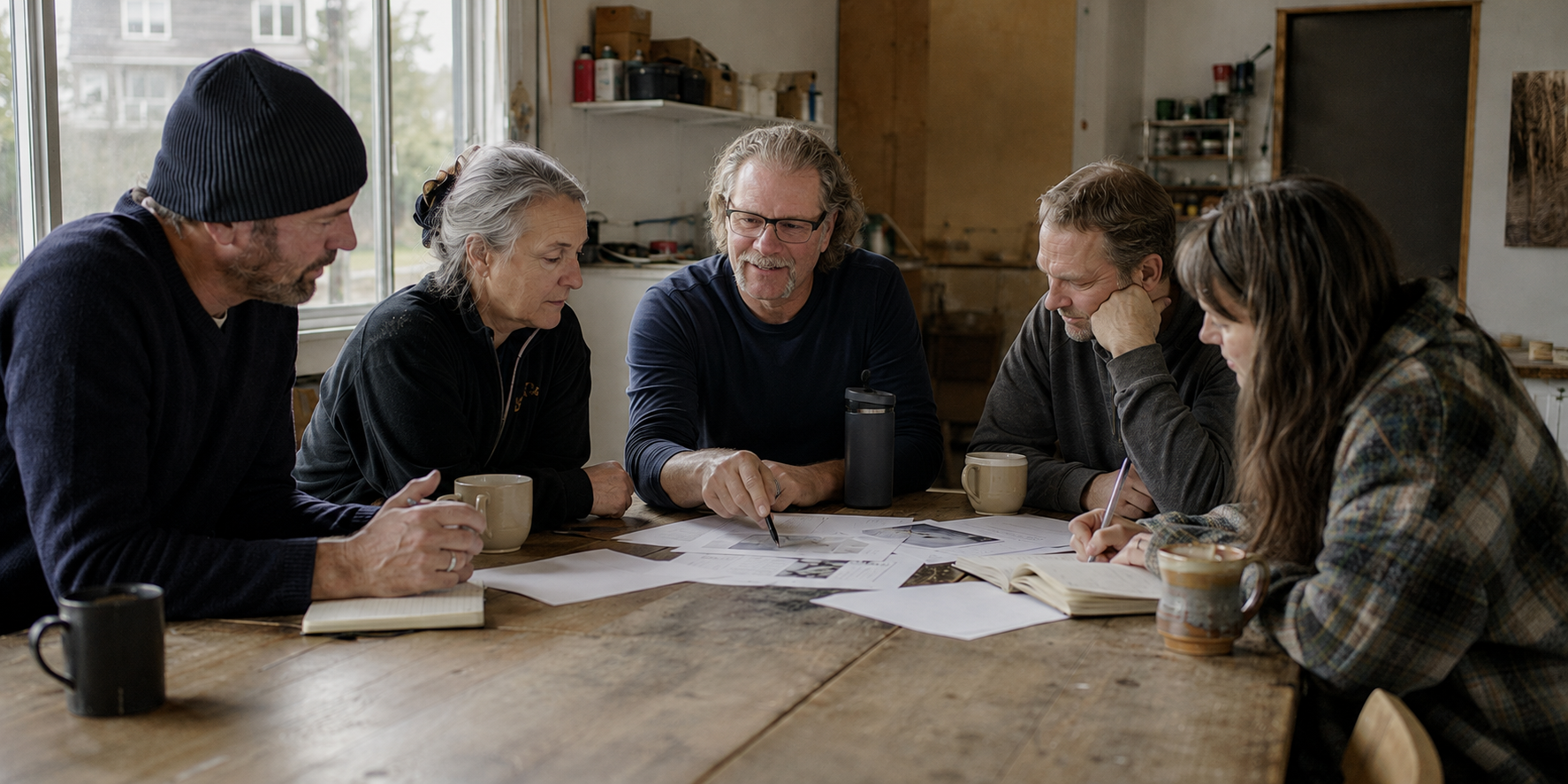
Business After Capitalism began in 2014—not in a classroom or think tank, but inside an adventure-guiding agency.
At the time, Ray Bretzloff was running Pure Life Adventures. It was his first practical experience as the primary decision-maker in a business. Ideas about leadership, value, growth, cooperation, and responsibility were no longer abstractions. They had to become decisions—decisions that affected people, money, relationships, the community, and the future of the company.
During the same period, Ray began consulting with other local adventure businesses as they started, expanded, or reconsidered the direction of their companies. He was also deeply involved in community economic development: serving as president of a tourism board of directors, managing community events, and initiating and participating in local business-development groups.
These overlapping experiences provided the environment in which Business After Capitalism began to take shape.
IMAGE

From Rudimentary Theories to Practical Strategies
The manuscript and the work evolved together.
Early theories were put into practice. Some were confirmed. Others encountered limitations, contradictions, or consequences that had not yet been considered. They were questioned, revised, and tested again.
Over the years, what began as a collection of observations gradually developed into a more coherent body of thought. Ray continued refining the manuscript until he felt the principles had become sufficiently viable, repeatable, and predictable to share as practical strategies.
That history is fundamental to the book.
Business After Capitalism is not an abstract argument about how business ought to work. It emerged through the experience of making decisions, advising entrepreneurs, participating in community development, and attempting to build real alternatives.
The book’s central distinction is simple but consequential:
Business is not capitalism.
Business is a human activity. People organize, create, solve problems, meet needs, and exchange value. Capitalism is one way those activities have been structured—but it is not the only way they can be structured.
Once we separate the two, a much more useful question becomes possible:
What could business become?
Activate Us:
A Wider Proving Ground
The writing of Business After Capitalism began before Activate Us was founded.
Activate Us developed later as a three-person, independent think tank with a wider societal focus. Business is part of that work, but it is not its entire scope. Activate Us explores the structures, relationships, and patterns that shape how people participate in society more broadly.
It also became an important proving ground for the principles developing within BAC.
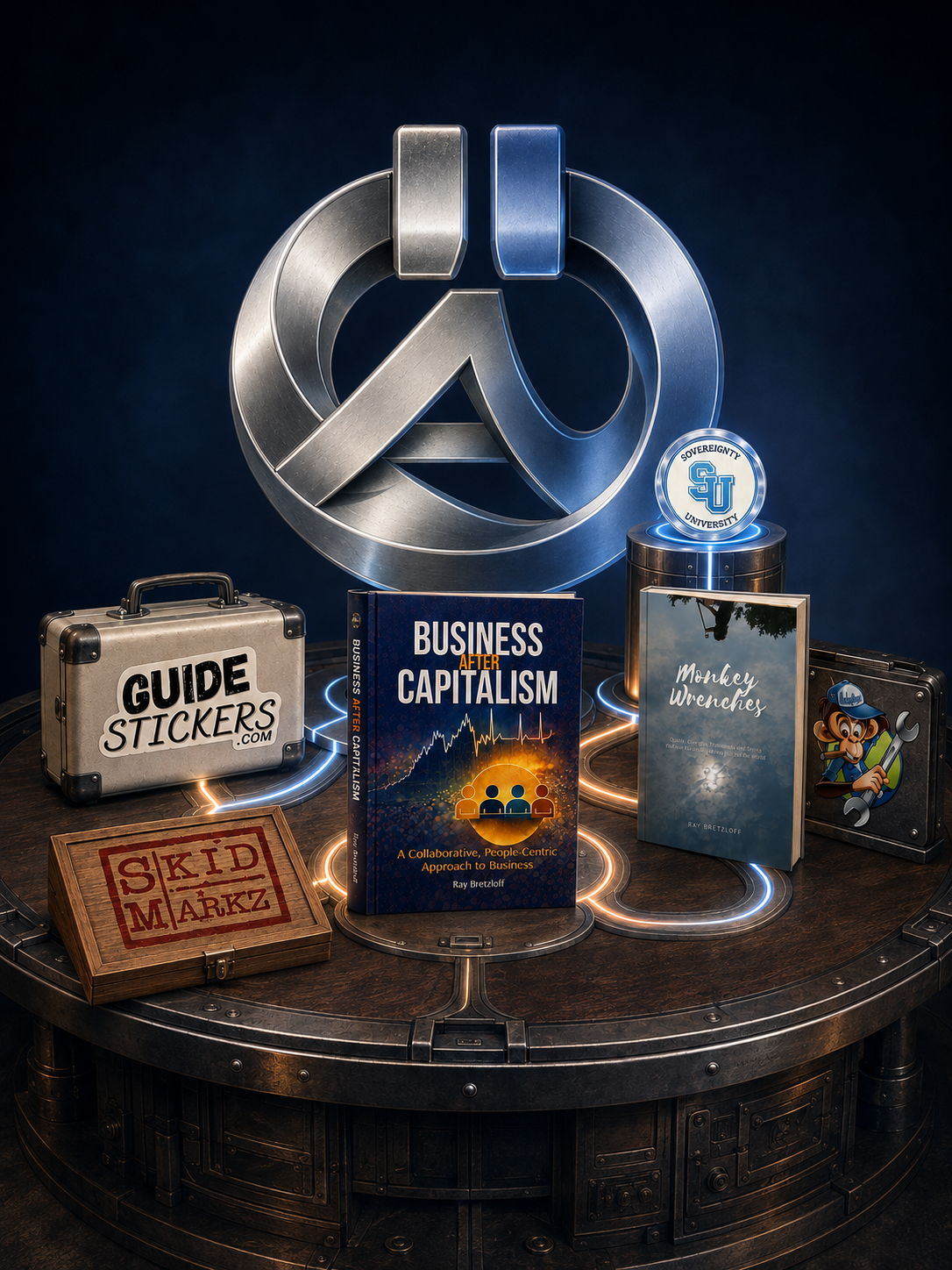
Through projects such as Skid Markz, Monkey Wrenches greeting cards, GuideStickers, the Monkey Wrenches book, and now Business After Capitalism as a business project in its own right, the ideas could be tested under different conditions.
Each project required theory to become something tangible—something that could be made, communicated, exchanged, organized, and sustained.
Together, these experiments reinforced a principle at the heart of both Activate Us and BAC:
An idea is not complete merely because it makes sense.
It must also become usable.
Business After Capitalism and The BRIDGE
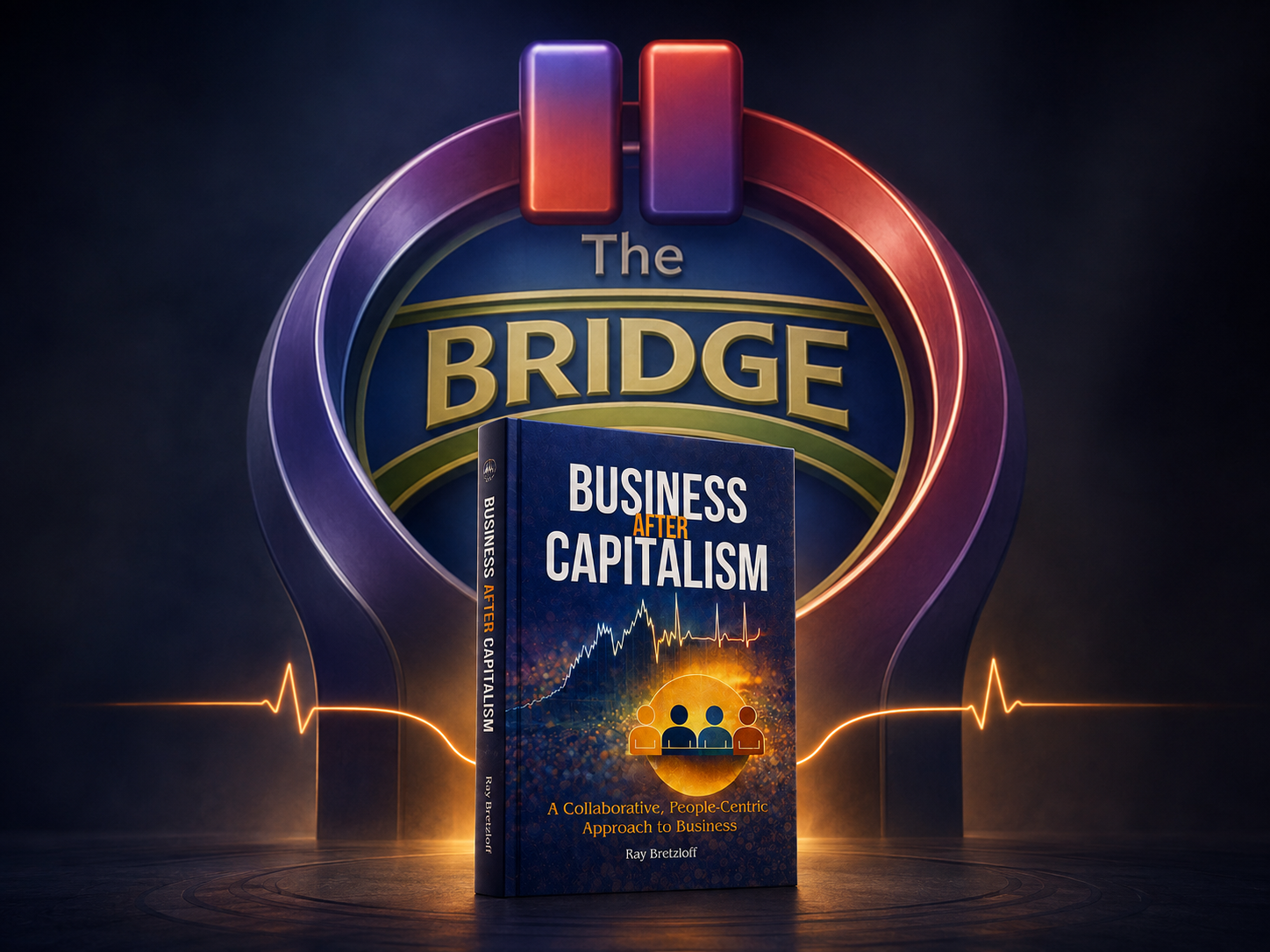
Business After Capitalism is also closely connected to The BRIDGE, the broader societal model developed through Activate Us.
The BRIDGE is a three-dimensional, holistic, and interconnected model of society. It examines how individuals and civilizations can progress from dependence (including co-dependence) through independence and to interdependence capable of working together with other interdependent individuals, businesses, and societies.
BAC can be understood as a microcosm of that model.
It follows the same progression and incorporates much of the same depth, but within the arena of business.
The connection between BAC and The BRIDGE matters because business is not separate from society. Business shapes our communities, institutions, relationships, and everyday lives. At the same time, every business is shaped by the society in which it operates.
Nor can the individual be separated from either one.
The way a person approaches business is reflected in how that person approaches relationships, responsibility, power, freedom, and participation elsewhere. Who we are is fundamental to what we do.
The BRIDGE applies this understanding to society as a whole. BAC applies it within business—examining how enterprise can move from relationships built around dependence or co-dependence, through greater independence and agency, and ultimately toward forms of interdependence in which participants become stronger through their relationships with one another.
Because of the complexity of The BRIDGE, it can be difficult to comprehend all at once. So, business offers a more familiar point of entry. Nearly everyone encounters business daily—as an employee, customer, owner, supplier, investor, or member of a community shaped by commercial decisions.
BAC therefore does more than explore the future of business. It also helps bridge the distance between our
everyday economic experiences and the wider societal model of The BRIDGE.
Business After Capitalism is not a book in isolation. It is one doorway into a much larger body of work.
About Ray Bretzloff
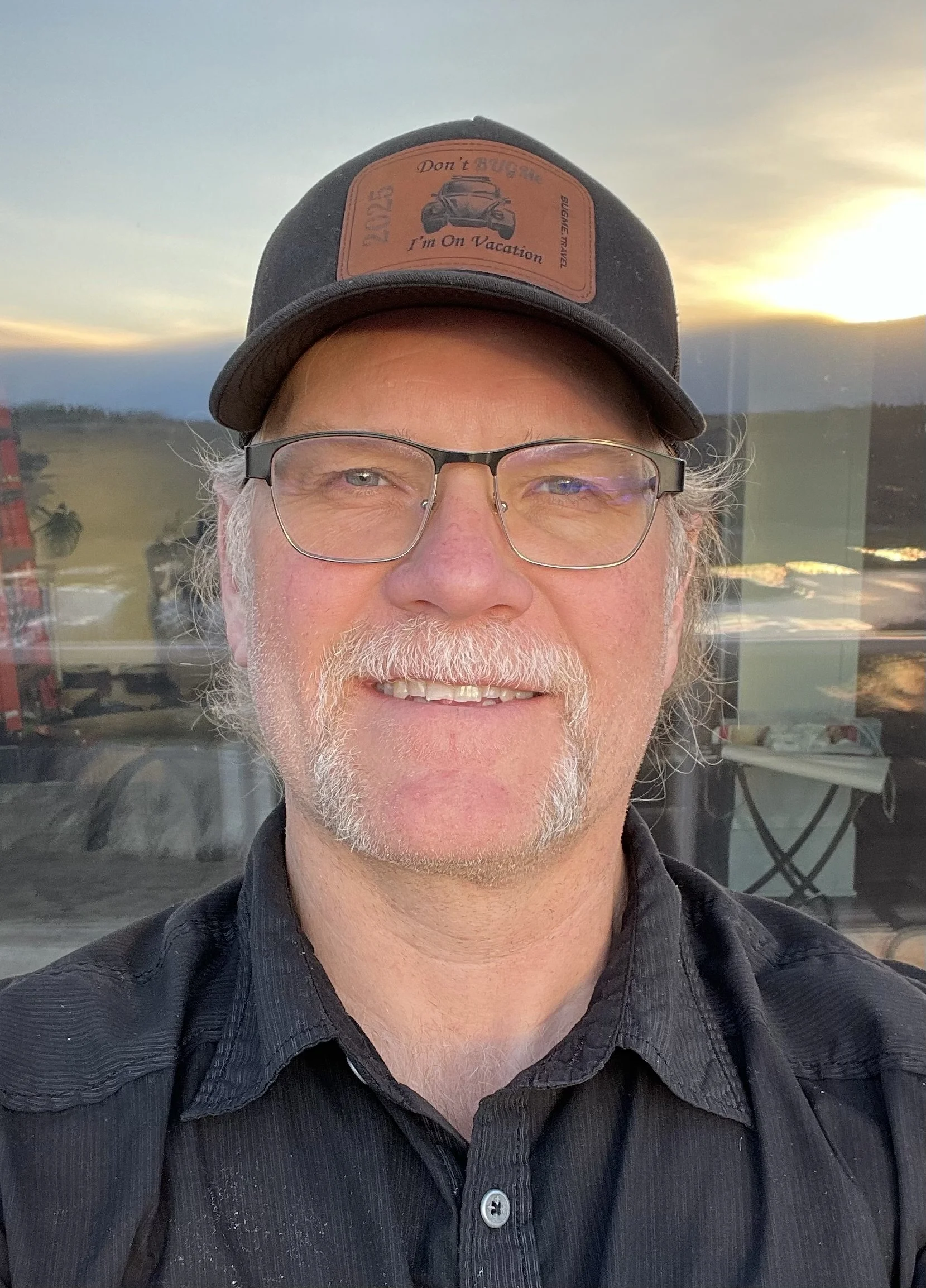
Ray Bretzloff is a writer, entrepreneur, community builder, and co-founder of Activate Us.
His path to this work has been practical rather than purely academic. It has included running an adventure-guiding agency, advising local tourism businesses, leading a tourism board, organizing community events, participating in business-development groups, publishing books and products, and helping create commercial experiments based on different ways of organizing value.
Ray is the author of Monkey Wrenches and Business After Capitalism, his third book. He also co-founded Don’t BUGMe I’m on Vacation, a travel discovery platform designed to connect travelers directly with local businesses without commissions, pay-to-rank placement, or platform gatekeeping.
Across these projects, he returns to a consistent set of questions:
How can we organize useful human activity without making extraction its central purpose? How can enterprise expand agency rather than dependence? How can value circulate through businesses and communities rather than continually accumulating outside them? And what becomes possible when ordinary people begin building alternatives themselves?
Ray develops these ideas through writing, but also through the imperfect work of putting them into practice.
Why “Us”?
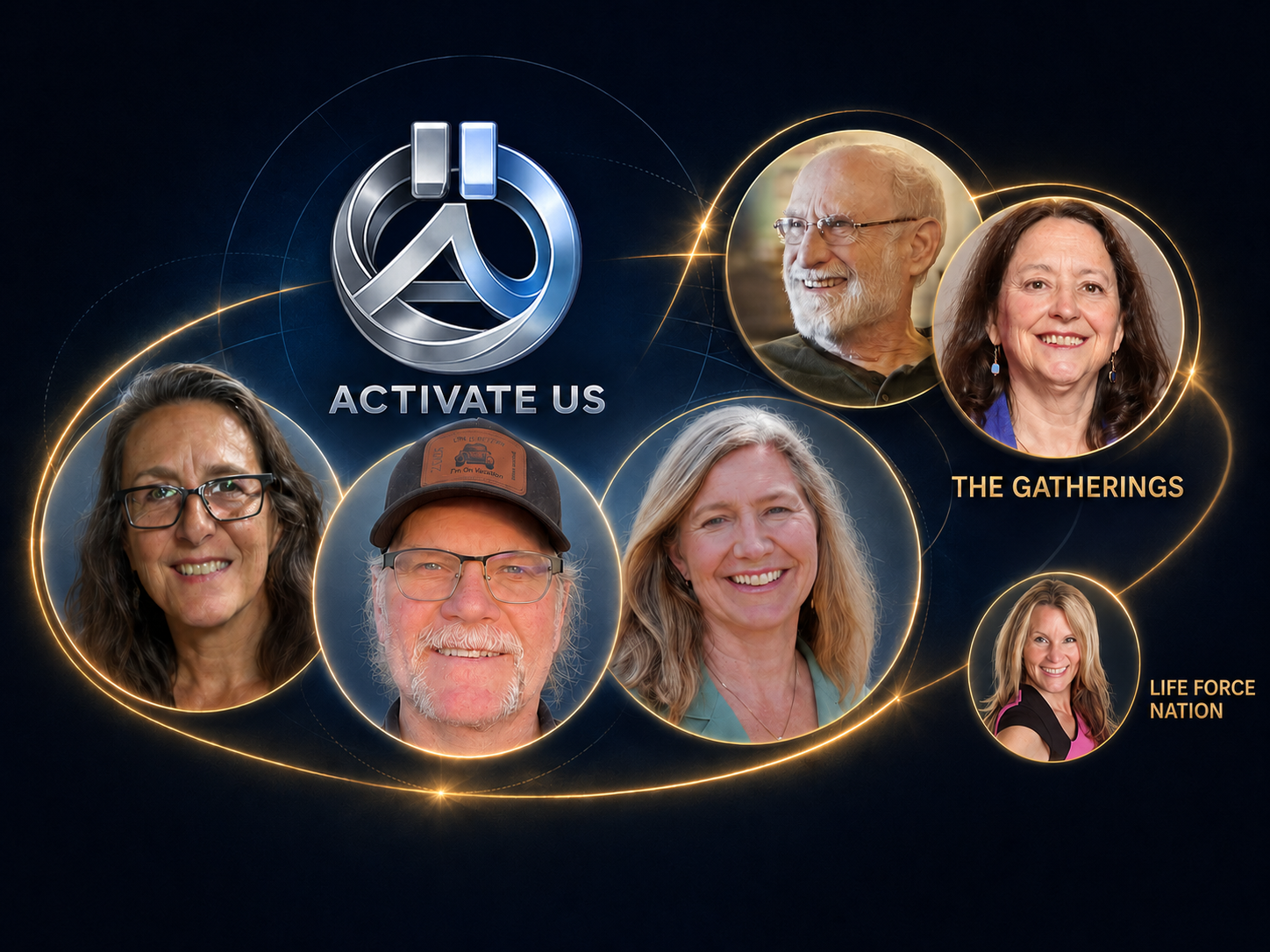
Ray wrote Business After Capitalism, but the thinking behind it did not develop in isolation.
It has been shaped by business owners, clients, community members, collaborators, conversations, and practical experiments. Activate Us has provided a place to develop and test a wider body of work, while independent relationships with other organizations have continued to challenge and strengthen it.
“Us” also includes the entrepreneurs, workers, organizers, readers, and experimenters already creating alternatives—often without having a shared name for what they are doing.
This is not an attempt to place every project or idea beneath one organization. It is independent work with shared purpose.
An Invitation
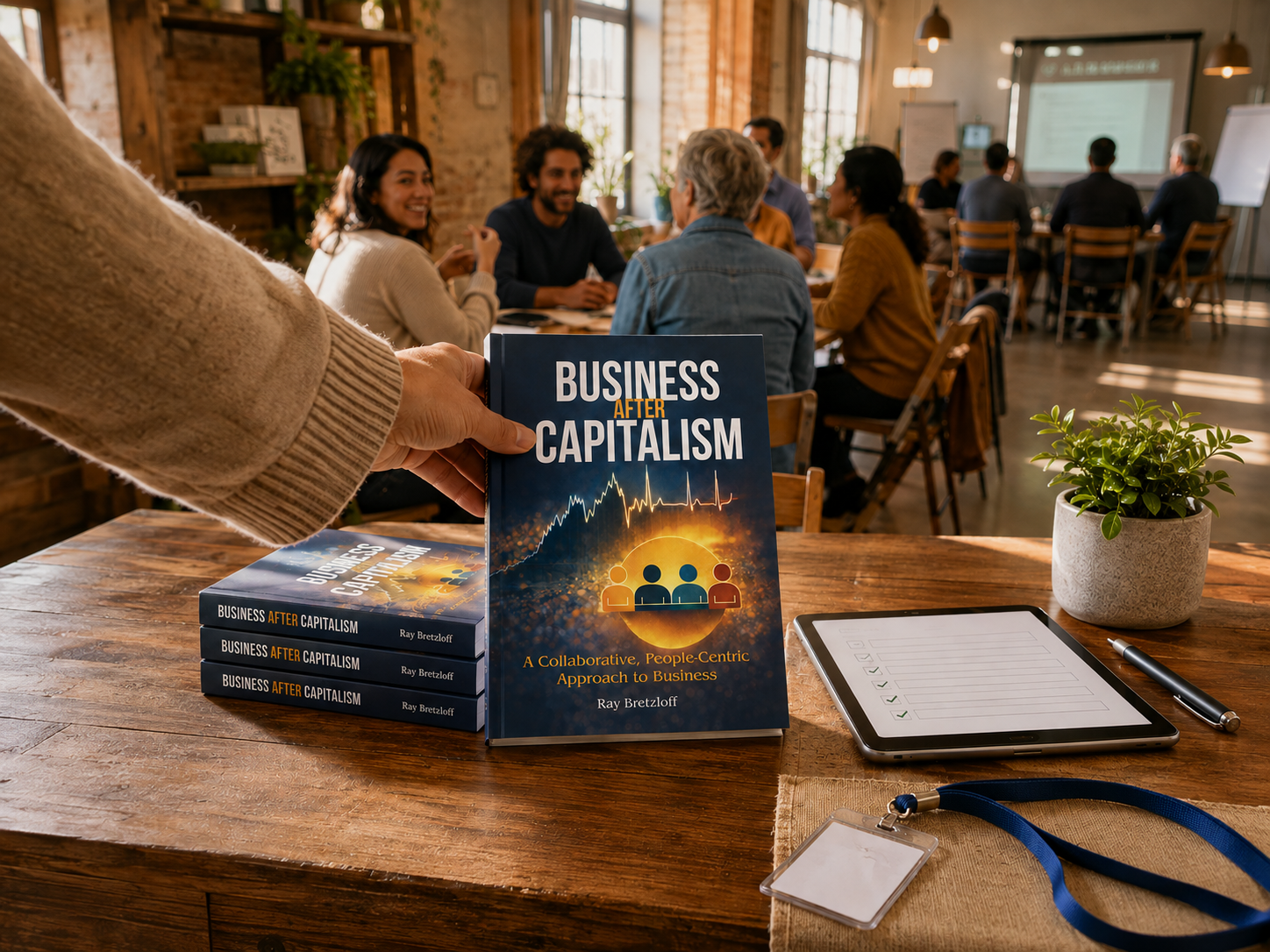
Business After Capitalism does not offer a final economic system or ask readers to adopt another rigid ideology. It offers a way of seeing, a set of practical strategies, and an invitation to participate in the continuing evolution of business.
If you feel compelled to reimagine not only what we do in business, but how we do it, this work is for you. Read the book. Explore the projects. Bring the ideas into your business, classroom, community, or organization. Question them, test them, adapt them—and help carry business somewhere we have not yet imagined.
CONTACT
Continue the Conversation
Business After Capitalism is a starting point, not an endpoint.
If you would like to invite Ray to speak, organize a workshop or facilitated conversation, discuss books for a team or classroom, request an interview or review copy, or explore an aligned collaboration, we would be glad to hear from you.
Tell us what you have in mind. Your message will go directly to Ray and the Activate Us team.
ray @ activateus.org