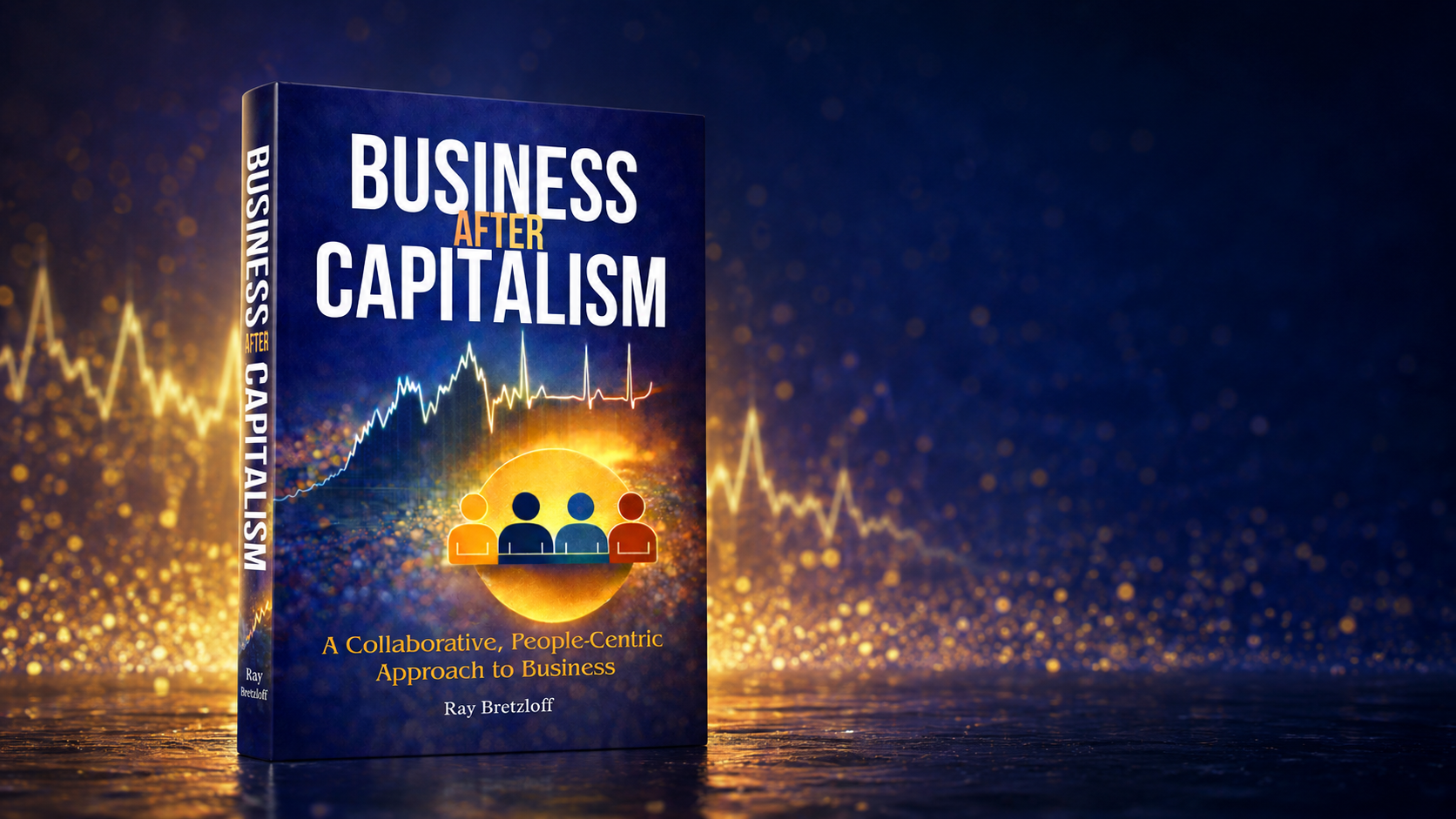
Business After Capitalism explores how business can evolve beyond extraction, domination, and endless growth; without abandoning entrepreneurship, ownership, innovation, or exchange.
The problem is not business itself.
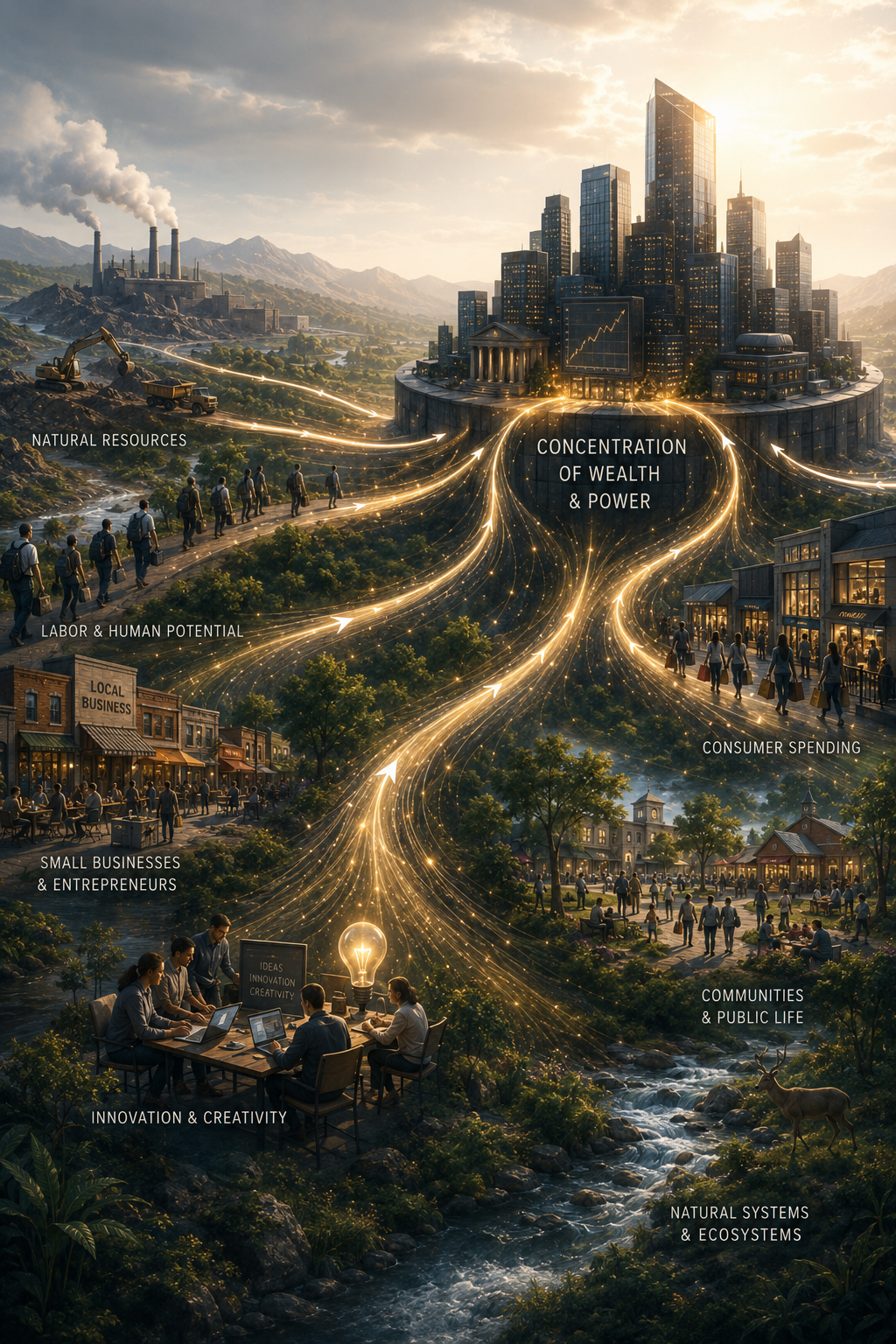
Capitalism has become deeply entangled with exploitation, inequality, ecological destruction, and the concentration of wealth and power.
Yet many proposed alternatives appear to require the rejection of business altogether—along with entrepreneurship, ownership, initiative, ambition, and individuality.
This creates a false choice.
We are asked to defend an economic system that is increasingly difficult to justify, or abandon many of the human capacities that make enterprise creative, adaptive, and productive.
Business After Capitalism begins somewhere different.
It asks whether business can be separated from the system that currently defines it—and whether enterprise can evolve into something more equitable, participatory, and life-supporting.
Business is not capitalism.
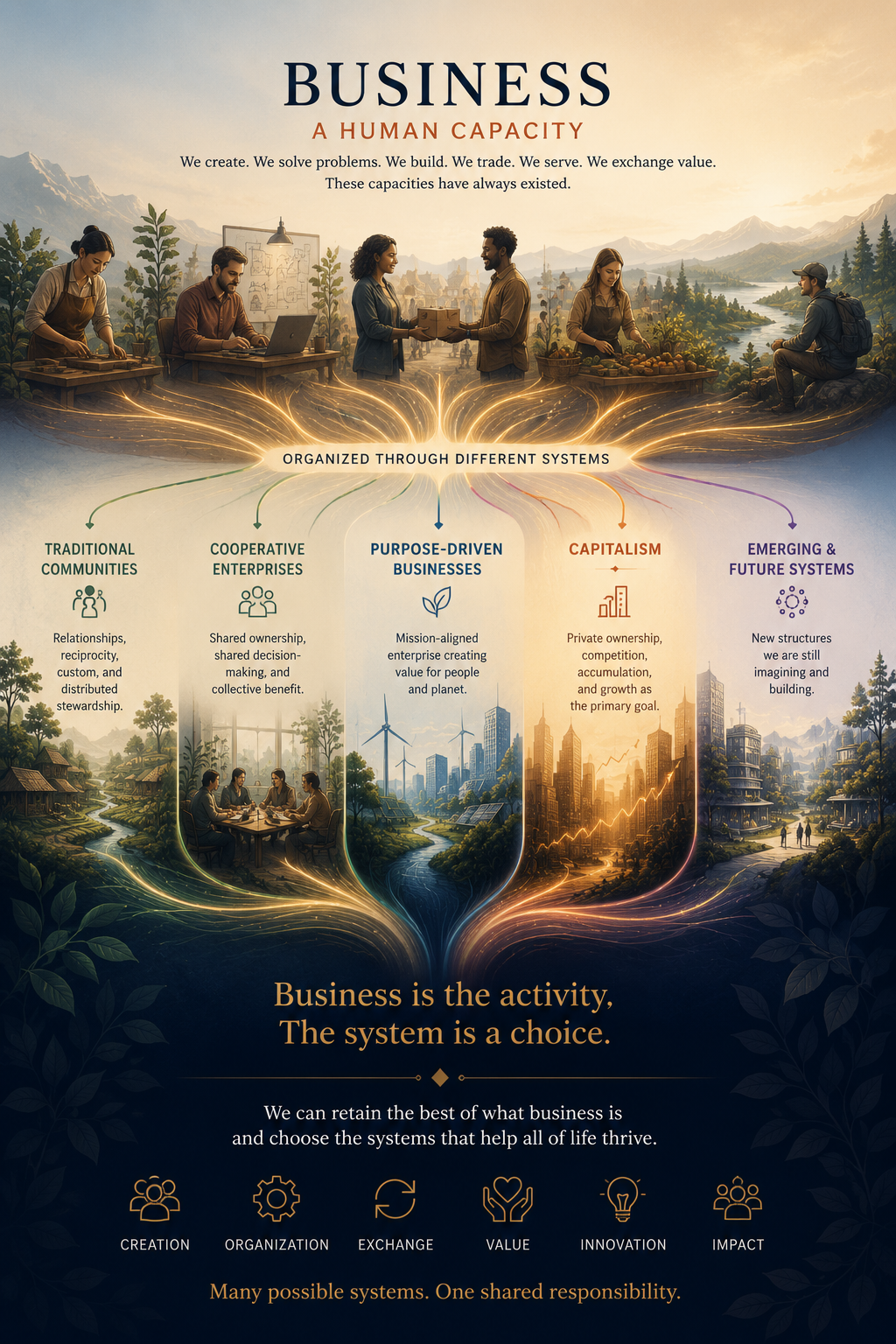
Business is a human activity. Capitalism is a system.
People have always organized, produced, traded, collaborated, invented, and exchanged value. Capitalism did not create these capacities. It arranged them around particular assumptions about ownership, accumulation, competition, growth, and power.
Because business and capitalism have become so closely associated, it can be difficult to imagine one without the other.
But they are not inseparable.
Business can be redesigned. Ownership can take different forms. Value can circulate rather than concentrate. Enterprise can strengthen communities, ecosystems, and individual sovereignty rather than depend on their depletion.
Business existed before capitalism.
It can exist after it.
What would business become if capitalism were no longer its organizing system?
Business After Capitalism explores questions such as:
Can ownership exist without domination?
Can enterprise create value without extracting it?
What replaces endless growth as the central measure of success?
How might wealth circulate rather than accumulate?
Can entrepreneurship strengthen both individual and collective sovereignty?
What would competition become inside a more collaborative economy?
How can businesses function as healthy participants within social and ecological systems?
The book does not offer a single rigid model.
It develops a practical framework for examining how business might evolve—and how that evolution may already have begun.
This is not an argument against business.

Business After Capitalism does not call for the disappearance of entrepreneurship, ownership, innovation, exchange, ambition, or individual initiative.
It questions the assumption that these capacities must remain organized through extraction, dependency, domination, and perpetual expansion.
Moving beyond capitalism does not require us to abandon enterprise.
It requires us to reconsider what enterprise is for, how it is structured, what it depends upon, and where the value it creates ultimately flows.

Beyond extraction.
Toward circulation.
Business can play a vital role within this kind of economy. Instead of concentrating wealth, it can help distribute opportunity. Instead of creating dependency, it can strengthen sovereignty. Instead of treating people, communities, and ecosystems as inputs, it can recognize them as active participants (and recipients) in the creation of value.
A healthy economy behaves less like a machine for producing growth and more like a living metabolism. Resources move. Value circulates. Participants both contribute to and benefit from the systems they depend upon. This does not require every business to become identical, communal, or non-commercial. It requires structures that allow enterprise to succeed by improving the health of the systems around it.
The result is not the elimination of benefit, but an upward spiral of benefit—where individual success contributes to collective strength, and collective strength creates new possibilities for individuals.
A practical exploration of what comes next.
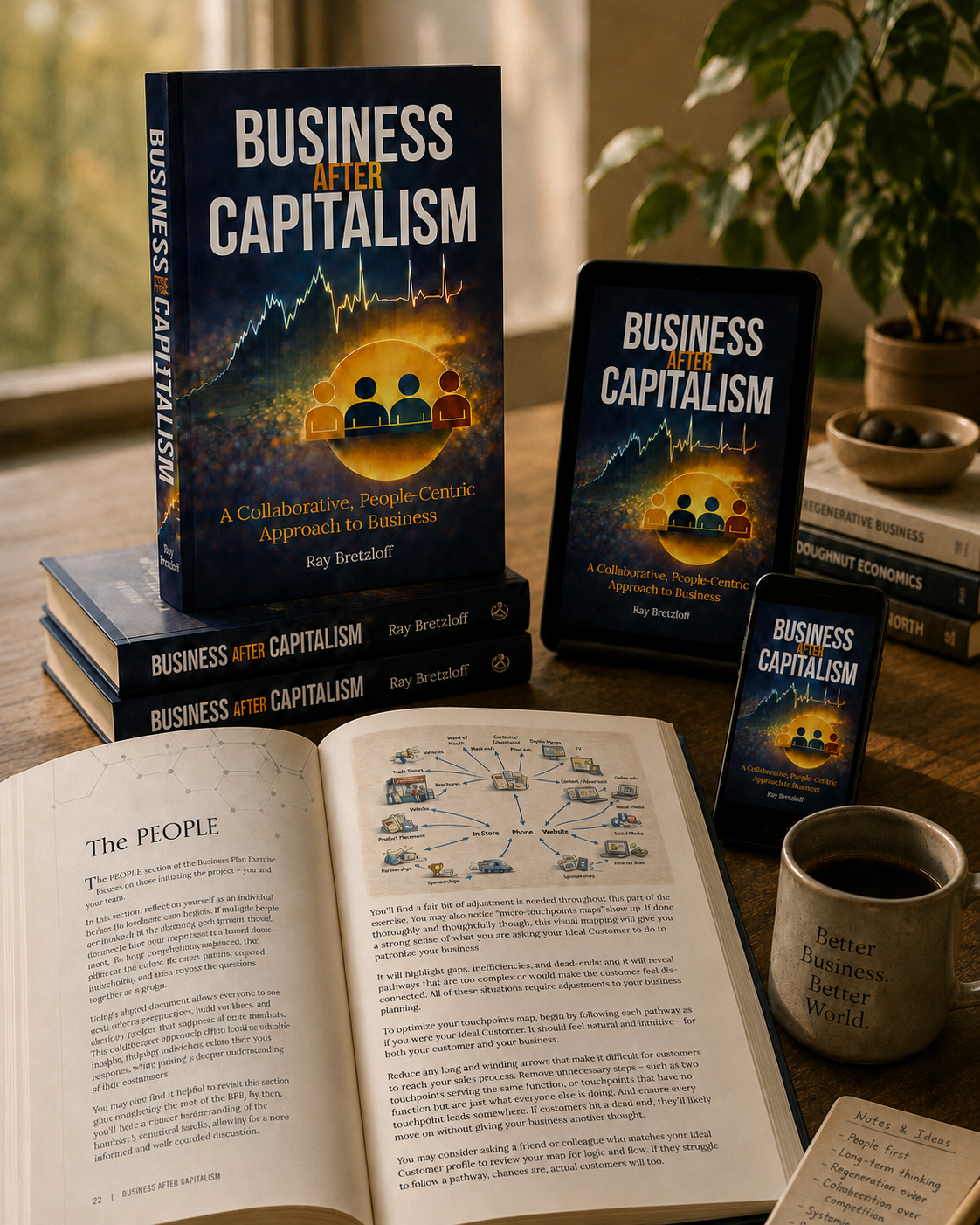
Business After Capitalism begins with a simple premise: although capitalism is the most dominant approach to business, it is not the final possibility of what business can be.
The book examines the assumptions beneath our present economic system and explores how enterprise might operate differently when accumulation, domination, and endless growth are no longer treated as necessities.
Drawing from entrepreneurship, systems thinking, economics, community development, and years of work through the think tank Activate Us, Ray Bretzloff develops a framework for imagining—and building—a different relationship between business, value, ownership, and society.
This is not a prediction of a distant future.
It is an invitation to recognize possibilities emerging now and to participate more deliberately in what business becomes next.

For those who believe we can move beyond capitalism without abandoning enterprise.
Business After Capitalism is written for entrepreneurs, business owners, organizers, educators, students, community builders, and independent thinkers who sense that the existing economic system is no longer adequate—but who remain unconvinced by the limited alternatives usually presented.
It is for people who believe creativity, ownership, ambition, exchange, and individual initiative still matter. It is also for those who believe these capacities can be organized in ways that create greater equity, sovereignty, resilience, and shared benefit.
You do not need to arrive with a fixed political identity or a preferred economic model. Only a willingness to reconsider what business is, what it could be, and what we might ask it to become
About Ray Bretzloff
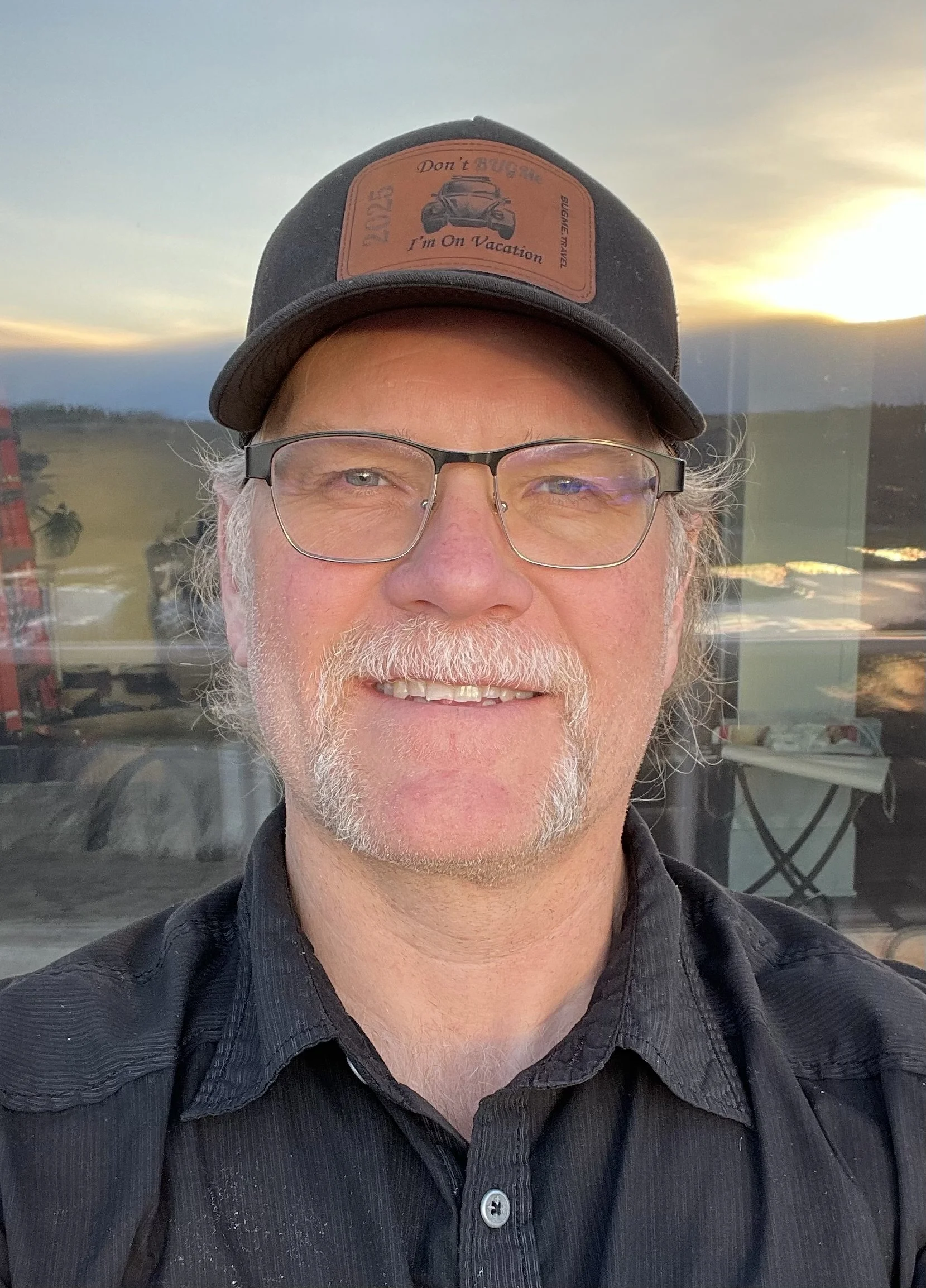
Ray Bretzloff is an entrepreneur, author, and systems thinker whose work explores how business, ownership, collaboration, and economic participation might be organized differently.
Through Activate Us, he has spent years developing practical frameworks for examining the systems that shape individual agency, community resilience, and the circulation of value.
His work is grounded less in abstract theory than in entrepreneurship, observation, experimentation, and a persistent question:
What becomes possible when we stop treating the current system as the only system?
Business After Capitalism brings these ideas together into a broader framework for understanding what enterprise could become next.
Who This Book Is For

Business After Capitalism is written for people who can see that something in the current economic system is not working, but who are not interested in simply rejecting business, entrepreneurship, ownership, or exchange.
It is for readers who want to understand how enterprise might evolve into something more equitable, collaborative, resilient, and life-supporting—without losing the creativity, initiative, and independence that make business valuable in the first place.
You may be an entrepreneur, educator, organizer, student, community builder, or simply someone trying to reconcile your values with the way business is currently practiced.
If that tension feels familiar, you may recognize yourself in Sophia.
Meet Sophia
Sophia is a fictional reader whose questions, frustrations, and hopes reflect many of the people this book was written for. Her story offers a more personal way into the ideas behind Business After Capitalism.
Beyond The Book
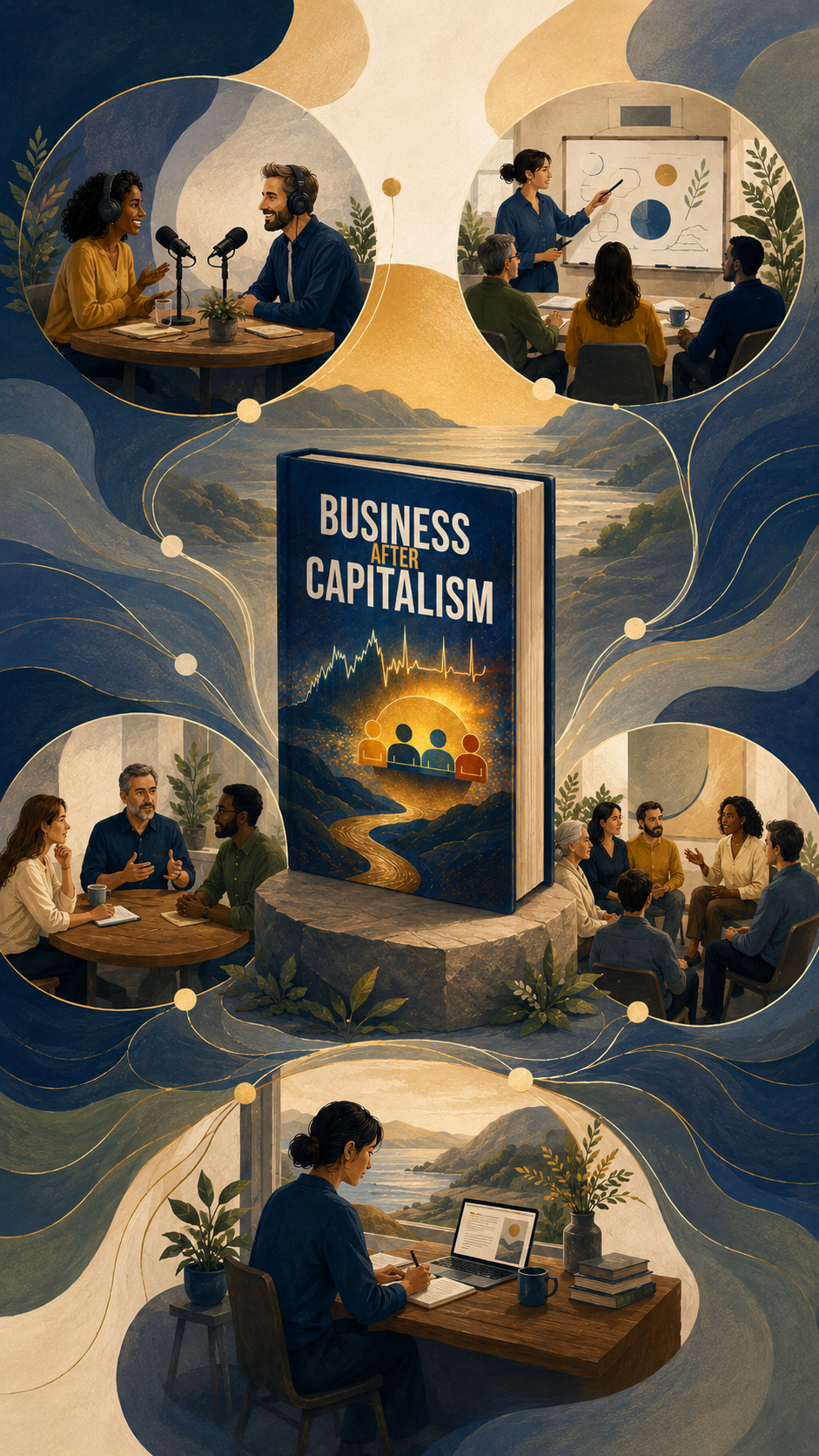
Business After Capitalism is a starting point.
The ideas in the book can be explored more deeply, applied to real projects, discussed with others, or connected to the wider BRIDGE model through workshops, coaching, books, exercises, and video modules.
Whether you want to rethink a business challenge, explore collaboration, strengthen a community, or examine your own role in creating change, there are several ways to continue.
Explore:
BAC Coaching — apply the book’s people-first ideas to a specific business or project question.
Activate Your Cascade — explore how businesses and people can support one another through intentionally collaborative networks.
Community Starter Kit — bring people-first thinking into the practical work of building and sustaining community.
Access Potential — examine the personal assumptions, habits, relationships, and choices that shape what you can create.
The BRIDGE Workbook + Video Modules — explore the wider framework behind Business After Capitalism at your own pace.
Monkey Wrenches — extend the questioning beyond business into the assumptions that shape our social and material world.
The book introduces one part of a much larger conversation.